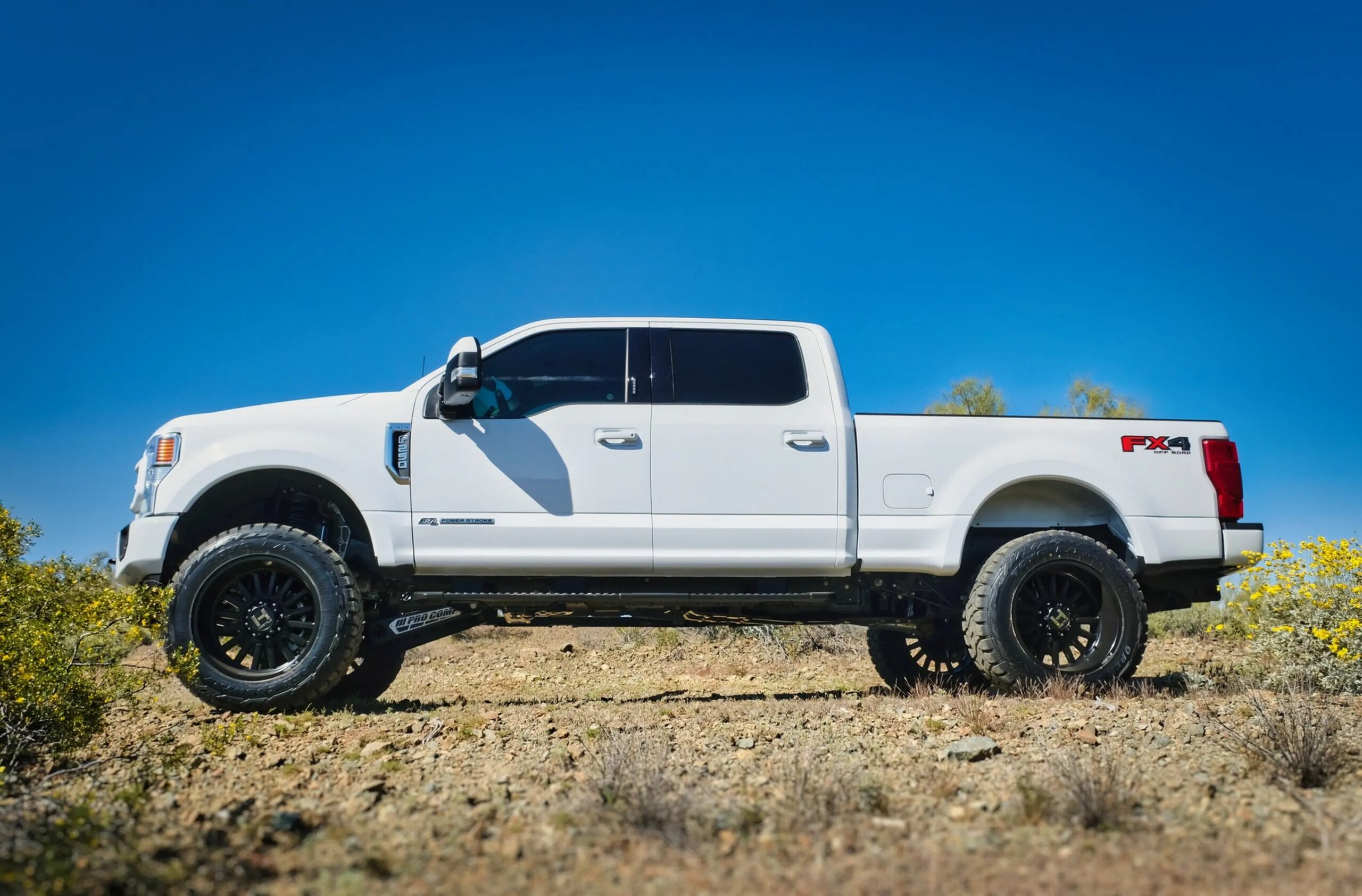
If you’re trying to decide between a leveling kit vs lift kit for your truck, you’ve probably already fallen down the internet rabbit hole — and found ten different answers from people who’ve never turned a wrench. Here’s the straight version from a shop that installs both every single week.
A leveling kit and a lift kit solve different problems. One fixes your truck’s stance. The other transforms the whole truck. Picking the wrong one means overpaying for height you didn’t want — or ending up with a truck that still doesn’t clear the tires you bought.
Let’s break it down the way we break it down for customers standing in our shop.
Leveling Kit vs Lift Kit: The Core Difference
Most trucks leave the factory with a slight nose-down stance — engineers call it “rake,” and it’s there so the truck sits level when you’ve got a load in the bed. A leveling kit raises the front of the truck (usually 1.5 to 2.5 inches) to match the rear. That’s it. Simple, affordable, effective.
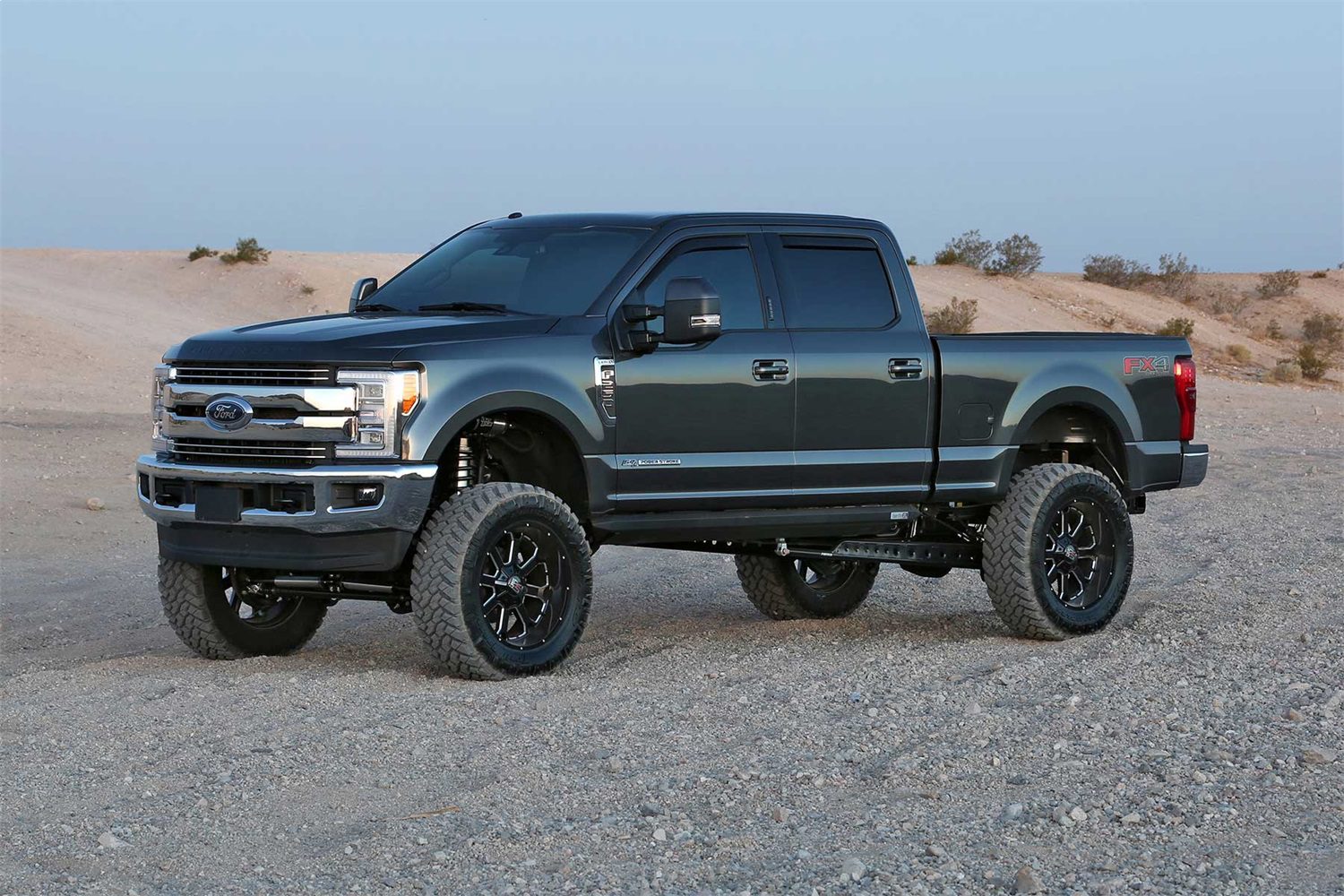
A lift kit raises the entire truck — front and rear — anywhere from 3 inches to 6 inches or more, using new suspension components: taller coilovers or struts, lift blocks or new leaf packs, extended shocks, and on bigger lifts, drop brackets and corrected steering geometry.
Think of it this way: a leveling kit fixes the factory stance. A lift kit builds a different truck.
When a Leveling Kit Is the Right Call
We recommend leveling kits to a lot of our customers, and there’s zero shame in it. A leveling kit makes sense when:
- You like your truck’s overall height but hate the nose-down look
- You want to fit slightly larger tires — usually up to 33s on most full-size trucks
- You daily-drive the truck and want to keep factory-like ride and handling
- You tow or haul and don’t want to mess with your load geometry too much
- Budget matters — a quality leveling kit installed is a fraction of a full lift
A good leveling kit with the right shocks rides damn near like stock. That’s the appeal. You get the stance fixed, room for a meatier tire, and you keep the truck practical — easy to park, easy to get in and out of, no step ladder required.
What a Leveling Kit Won’t Do
Let’s be honest about the limits. A leveling kit won’t give you the tall, aggressive presence of a lifted truck. It won’t clear 35s or 37s. And cheap spacer-only kits stacked on worn-out factory struts can ride rough — which is why we spec leveling kits with proper components, not just the cheapest pucks on the shelf.
When You Actually Need a Lift Kit
A lift kit is the answer when “level” isn’t the goal — taller is. You need a real lift kit when:
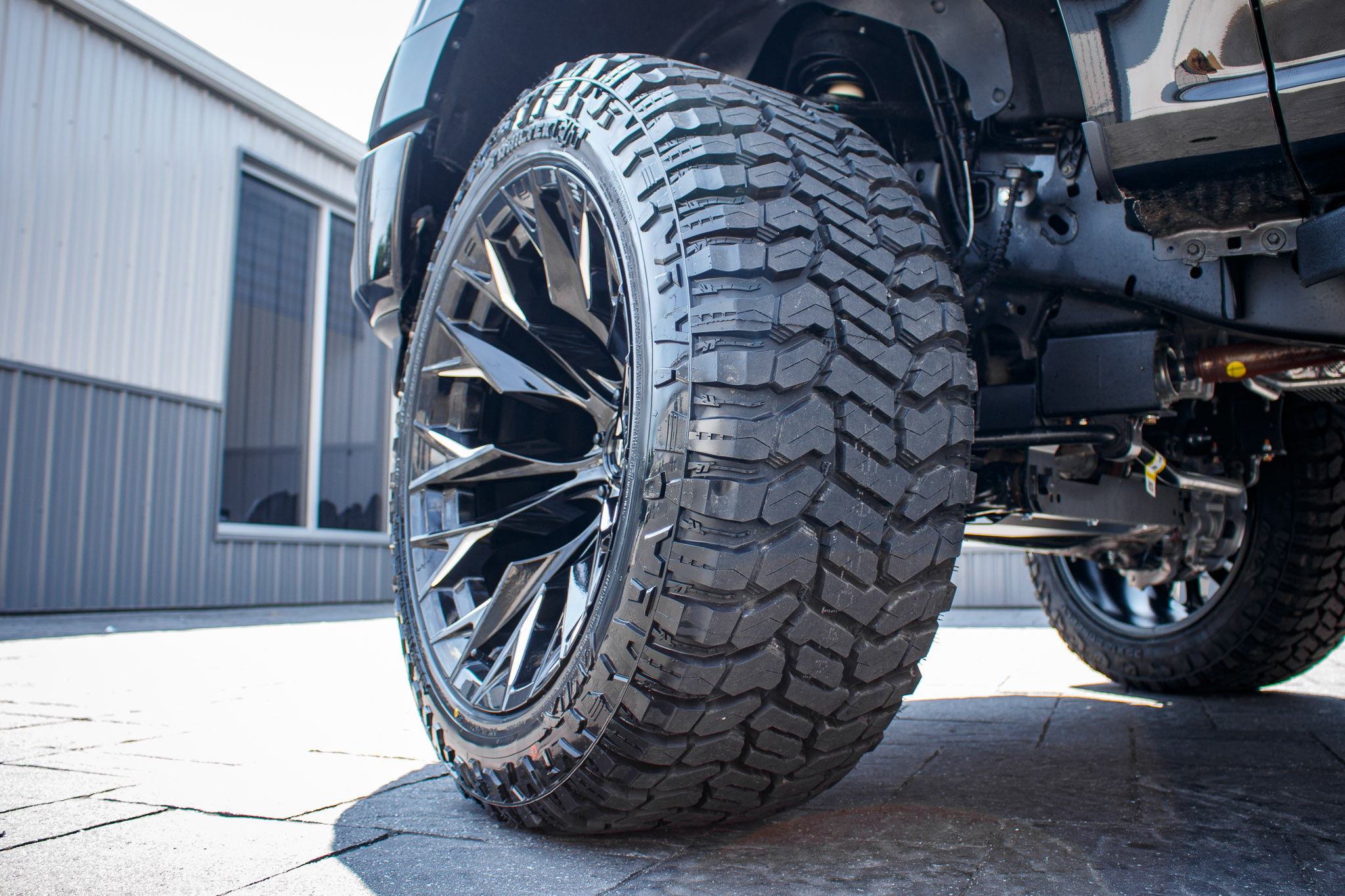
- You want to run 35-inch tires or bigger
- You want the unmistakable lifted-truck stance and presence
- You take the truck off-road and need actual ground clearance
- You’re building a show truck or a full custom build
- You’ve already got the mod bug and know you’ll want more later (buy once, cry once)
Here’s what separates a proper lift from a sketchy one: geometry. A quality lift kit corrects suspension angles, steering, and driveline geometry for the new ride height. Cheap kits just make the truck taller and leave your ball joints, CV axles, and tie rods to suffer. We don’t install those. If a kit is going to eat your front end alive in 20,000 miles, we’d rather talk you out of it than take your money.
Leveling Kit vs Lift Kit: Cost Comparison
Nobody likes vague pricing, so here are honest ranges for a professional installation at a real shop:
- Leveling kit (installed): typically a few hundred dollars all-in, depending on the truck and whether you’re upgrading shocks at the same time.
- 3 to 4-inch lift kit (installed): mid-range — kit plus labor, alignment included.
- 6-inch lift kit (installed): a serious investment — quality kit, labor, alignment, and usually done alongside wheels and tires.
Wheels and tires are a separate line item either way, and they’re where budgets actually go. A leveling kit with a fresh wheel and tire package can cost more than a basic lift kit alone — because tires are expensive and there’s no way around it. We lay all of this out up front during the consultation so there are no surprises.
And if the number makes you flinch, ask us about financing — we work with multiple lenders including no-credit-needed options, so you can build the truck now and pay over time.
Ride Quality: What Changes?
This is the question that actually matters for daily drivers. A quality leveling kit changes the ride very little. A quality lift kit from a reputable manufacturer — BDS, Rough Country, Zone, ICON, Eibach, and the other brands we work with — is engineered to ride well at the new height. A cheap lift kit rides like a lumber wagon and wears out components early.
The pattern we see: guys who buy the cheapest kit online, then pay us to fix the ride afterward. It always costs more than doing it right the first time. Every time.
Can You Go From a Leveling Kit to a Lift Kit Later?
Yes — and a lot of our customers do exactly that. Start with a level and wheels, enjoy the truck for a year, then come back for the full lift when the mod bug bites harder. There’s nothing wrong with building in stages. Just tell us that’s the plan up front, because it changes which components we recommend now so you’re not throwing parts away later.
Leveling Kit vs Lift Kit: The Bottom Line
Choose a leveling kit if you want a better stance, slightly bigger tires, stock-like manners, and money left in your pocket. Choose a lift kit if you want real height, big tires, off-road clearance, and a truck that turns heads from three lanes over.
Either way, the kit is only half the equation. Fitment, alignment, and installation quality decide whether the truck drives right when it’s done. That’s the part we obsess over.
Frequently Asked Questions
Does a leveling kit affect towing?
A front leveling kit doesn’t change your rear suspension or payload capacity, so towing is essentially unaffected. If you tow heavy, tell us — it affects which setup we recommend.
Will a leveling kit void my warranty?
A leveling kit can’t “void” your entire warranty. Under federal law, a manufacturer has to prove the aftermarket part caused a specific failure to deny that claim. That said, suspension-related claims get more scrutiny on any modified truck. We install kits from manufacturers that stand behind their products with real warranties.
Do I need an alignment after a leveling kit or lift kit?
Yes. Any change in ride height changes front-end geometry. We align every truck after suspension work — it’s part of doing the job right, not an upsell.
How long does installation take?
Most leveling kits are a same-day job. Full lift kits typically take a full day, sometimes two depending on the truck and how much else we’re installing. We’ll give you a straight timeline when you book.
Talk to the Build Team
Still torn between a leveling kit vs lift kit? Bring the truck by and let’s look at it together. We’ll talk about how you drive, what you want it to look like, and what makes sense for your budget — then build it right the first time.
Bad Boy Customs
6732 US-19, New Port Richey, FL
727-838-8016
Suspension & lift kit services · Financing options · Request a quote
We don’t follow trends. We build them. Bad Boy’s got your back.